
SEO for Service-Based Businesses: A Practical Guide to Getting Found Online
When someone needs a plumber, accountant, therapist, contractor, or other professional, they often start with a search engine. Search engine optimization (SEO) helps your business appear when potential customers look for the services you offer. Done well, SEO can bring more qualified visitors to your website and make it easier for them to contact you.
SEO is not a one-time task or a guarantee of a specific ranking. It is an ongoing process of improving your website, publishing useful information, and building trust with both search engines and prospective customers. Here are the core steps service-based businesses can take.
Understand How Customers Search
People may search for a service in different ways. Some know exactly what they need, while others describe a problem or ask a question. For example, a homeowner might search for “water heater repair,” “plumber near me,” or “why is my water heater leaking?”
Start by listing the services you provide, the locations you serve, and the questions customers commonly ask. Keyword research tools can help you discover related search terms, but customer conversations, sales inquiries, and online reviews are valuable sources of insight too.
Look for search phrases that reflect a real need and match your business. A high search volume is not useful if the searcher is looking for something you do not offer. Focus on relevant terms that are likely to connect with the right customers.
Create a Dedicated Page for Each Important Service
A single page listing every service may not give search engines or customers enough information. Consider creating a separate page for each major service, especially when the services involve different customer needs or search terms.
A useful service page should explain:
- What the service includes
- Who the service is for
- What problems it addresses
- What customers can expect from the process
- Which areas you serve, if location is relevant
- How to request a quote, consultation, or appointment
Write for people first. Use clear, specific language and include relevant search terms naturally in the page title, headings, and copy. Avoid repeating keywords unnaturally or creating thin pages that offer little information.
Strengthen Your Local SEO
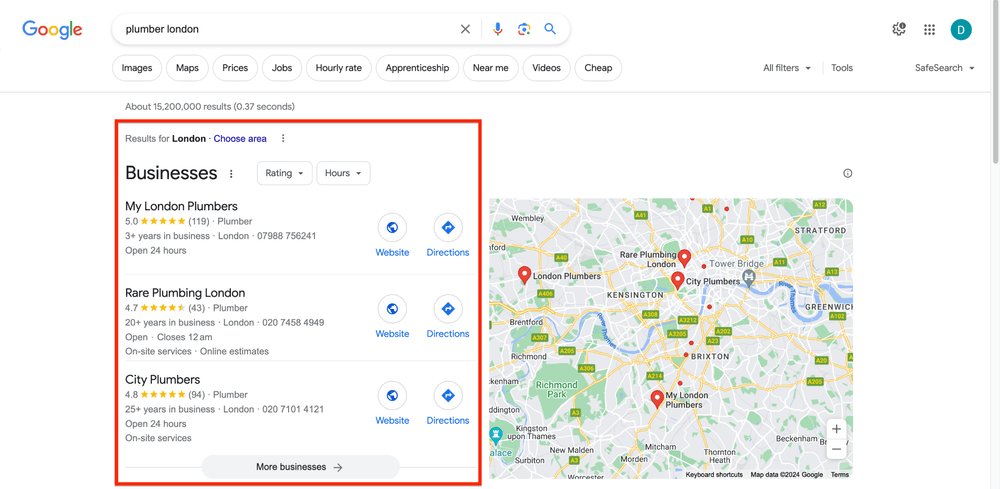
For businesses that serve customers in a particular city or region, local SEO is essential. It helps your business appear in location-based searches, including searches such as “electrician in Tacoma” or “dentist near me.”
Complete Your Business Profile
Claim and verify your Google Business Profile and keep its information accurate. Use the correct business name, address or service area, phone number, website, hours, and business categories. Add current photos and describe your services clearly.
Choose the setup that reflects how your business operates. If customers do not visit your location, you may be able to hide your street address and list the areas you serve instead. Follow the platform’s guidelines when setting up or updating your profile.
Keep Business Details Consistent
Your business name, address, and phone number should be consistent across your website and reputable online directories. Inconsistent details can confuse potential customers and make it harder for search engines to match information about your business.
Build a Genuine Review Process
Reviews help prospective customers evaluate your business and can support your local visibility. Ask satisfied customers for honest feedback in a timely, respectful way. Make it easy to leave a review, but do not offer incentives in ways that violate a platform’s policies. Respond professionally to both positive and negative reviews, without sharing private customer information.
Make Your Website Useful and Easy to Navigate
A search result is only the beginning. Once visitors reach your site, they need to quickly understand what you do and how to take the next step.
- Use clear navigation and descriptive page names.
- Make your phone number and contact options easy to find.
- Include clear calls to action, such as “Request an Estimate” or “Book an Appointment.”
- Make sure the site works well on mobile devices.
- Use readable text, accessible color contrast, and descriptive image text where appropriate.
- Explain what happens after someone submits a form or calls.
Trust matters, especially when customers are choosing someone to work in their home, manage their finances, or provide professional care. Include accurate business information, staff credentials where relevant, customer testimonials with permission, and examples of your work when appropriate.
Improve Technical SEO
Technical SEO helps search engines access and understand your website. You do not need to be a developer to start with the basics, but some issues may require professional support.
- Page speed: Compress large images and avoid unnecessary scripts that slow down the site.
- Mobile usability: Check that text, menus, and forms are easy to use on a phone.
- Secure browsing: Use HTTPS across your website.
- Indexing: Make sure important pages are not accidentally blocked from search engines.
- Broken links: Review and fix links that lead to missing pages.
- Page titles and descriptions: Write unique, descriptive metadata that accurately reflects each page.
Tools such as Google Search Console can help you monitor how search engines find and index your site. Website analytics can show what visitors do after they arrive, though the tools you choose should match your privacy obligations and business needs.
Publish Content That Answers Customer Questions
Helpful content can introduce your business to people who are still researching a problem. Consider publishing answers to common questions, service explanations, maintenance advice, or guides to choosing a provider.
For example, a financial professional might explain common bookkeeping terms, while a home services company could describe warning signs that a repair is needed. Keep information accurate and current. For topics that could affect health, finances, safety, or legal rights, be especially careful to provide responsible information and avoid overstating results.
Content should support your services rather than distract from them. Link relevant articles to the service pages that help readers take the next step. Do not publish articles just to meet a posting schedule if they do not offer real value.
Earn Relevant Links and Local Mentions
Links from other websites can help people discover your business and may contribute to your site’s authority. Focus on earning links that make sense for your industry and community. Opportunities might include local business associations, professional organizations, community partnerships, supplier directories, or genuine local news coverage.
Avoid buying links or participating in schemes designed to manipulate rankings. These tactics can put your website at risk and rarely create lasting value. Strong service, useful resources, and meaningful community involvement are better foundations.
Measure Leads, Not Just Rankings
Search rankings are only one way to evaluate SEO. For a service business, more useful indicators may include:
- Calls and form submissions from organic search
- Appointment requests or quote requests
- Visits to important service pages
- Search queries that bring relevant visitors to the site
- Local profile interactions, such as website visits or calls
- The quality and eventual outcome of incoming leads
Set up conversion tracking carefully and make sure it respects applicable privacy requirements. Review performance over time rather than reacting to every short-term change. Search visibility can fluctuate, and SEO improvements may take weeks or months to show meaningful results.
Common SEO Mistakes to Avoid
- Targeting every service and location with nearly identical pages
- Using the same generic copy across multiple service pages
- Adding keywords so frequently that the writing becomes difficult to read
- Ignoring mobile visitors or making contact information hard to find
- Letting business hours, service areas, or contact details become outdated
- Buying reviews or links
- Expecting immediate results from SEO
- Focusing on traffic without checking whether it leads to real inquiries
A Simple SEO Starting Plan
- List your core services, ideal customers, and service areas.
- Review your website and update important service pages.
- Claim or improve your Google Business Profile, if eligible.
- Check that your contact details are accurate and consistent online.
- Make your site fast, mobile-friendly, and easy to navigate.
- Publish useful answers to questions customers ask regularly.
- Track calls, forms, and other meaningful business outcomes.
- Review results regularly and improve pages based on what you learn.
Make SEO Part of How You Serve Customers
Effective SEO for a service-based business is not about trying to trick search engines. It is about making your expertise easy to find, explaining your services clearly, and helping potential customers feel confident about contacting you.
Start with the essentials: accurate business information, useful service pages, a strong local presence, and a website that makes the next step obvious. Build from there with helpful content and steady measurement. Over time, these efforts can make your business easier to discover and help turn relevant searches into real customer relationships.