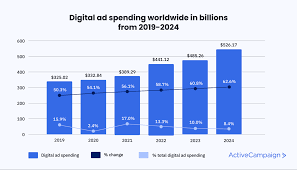
Online marketing has revolutionized the way businesses promote their products and services. In today’s digital age, having a strong online presence is essential for reaching a wider audience and driving growth. Let’s explore the key benefits of online marketing:
One of the biggest advantages of online marketing is its ability to reach a global audience. With the click of a button, businesses can connect with customers around the world and expand their market reach exponentially.
Online marketing allows businesses to target specific demographics, interests, and behaviors with precision. This targeted approach ensures that marketing efforts are more effective in reaching the right audience, leading to higher conversion rates.
Compared to traditional forms of advertising, online marketing is often more cost-effective. Businesses can choose from a variety of digital marketing channels such as social media, email, and search engine optimization to suit their budget and goals.
Online marketing provides valuable insights into campaign performance through analytics tools. Businesses can track metrics such as website traffic, conversion rates, and customer engagement in real-time, allowing for data-driven decision-making.
By leveraging online marketing strategies such as content creation, social media engagement, and search engine optimization, businesses can boost brand visibility and awareness among their target audience.
Interacting with customers through social media platforms, email campaigns, and personalized content fosters stronger relationships and loyalty. Online marketing enables businesses to engage with customers in meaningful ways that resonate with their needs and preferences.
In conclusion, online marketing offers businesses a powerful toolkit to reach and engage customers in today’s digital landscape. By harnessing the benefits of online marketing strategies, businesses can drive growth, increase brand awareness, and build lasting relationships with their target audience.
Online marketing’s ability to provide global reach to a vast audience is a game-changer for businesses looking to expand their market presence beyond geographical boundaries. By leveraging digital channels, companies can connect with potential customers worldwide, breaking down barriers and tapping into new markets with ease. This pro of online marketing opens up endless opportunities for businesses to increase brand visibility, drive sales, and establish a strong international presence in today’s interconnected digital landscape.
One of the key advantages of online marketing is the ability to target advertising efforts towards specific demographics with precision. By leveraging data analytics and user behavior insights, businesses can tailor their marketing campaigns to reach audiences based on factors such as age, location, interests, and online behavior. This targeted approach ensures that marketing messages resonate with the right audience, leading to higher engagement rates and increased conversion opportunities. Overall, targeted advertising in online marketing allows businesses to optimize their marketing strategies for maximum effectiveness and ROI.
Online marketing stands out as a cost-effective alternative to traditional marketing methods. By utilizing digital channels such as social media, email campaigns, and search engine optimization, businesses can reach their target audience at a fraction of the cost of traditional advertising. This affordability allows businesses of all sizes to allocate their marketing budget efficiently and achieve measurable results without breaking the bank. The ability to choose from a variety of online marketing strategies based on budget and goals makes it a highly attractive option for businesses looking to maximize their ROI in today’s competitive marketplace.
One significant advantage of online marketing is the ability to obtain measurable results through analytics tools. By utilizing various analytical platforms, businesses can track and analyze key performance metrics in real-time, such as website traffic, conversion rates, user engagement, and more. This data-driven approach provides invaluable insights into the effectiveness of marketing campaigns, allowing businesses to make informed decisions and optimize strategies for better outcomes. The ability to measure and quantify results accurately empowers businesses to refine their online marketing efforts continuously, ensuring maximum impact and return on investment.
Increased brand awareness and visibility is a key benefit of online marketing. By utilizing digital channels such as social media, content marketing, and search engine optimization, businesses can enhance their online presence and reach a wider audience. Through strategic branding efforts and engaging content, businesses can establish a strong brand identity that resonates with their target market, ultimately leading to greater recognition and visibility in the competitive online landscape. This heightened brand awareness not only attracts new customers but also fosters trust and loyalty among existing ones, solidifying the brand’s position in the market.
Enhanced customer engagement and interaction is a key benefit of online marketing that enables businesses to connect with their target audience on a more personal level. By leveraging social media platforms, email campaigns, and interactive content, businesses can actively engage with customers, gather feedback, and address their needs in real time. This two-way communication not only strengthens brand loyalty but also provides valuable insights for improving products or services based on customer preferences and behaviors. Ultimately, enhanced customer engagement fosters a sense of community and trust, leading to long-term relationships that drive business growth and success.
One significant advantage of online marketing is the 24/7 availability it offers for marketing campaigns. Unlike traditional marketing methods with limited operating hours, online marketing allows businesses to reach their target audience at any time of the day or night. This constant accessibility ensures that marketing messages can be delivered and received by potential customers around the clock, maximizing exposure and engagement opportunities. The ability to run campaigns continuously without time constraints enables businesses to maintain a consistent presence in the digital space and cater to a global audience across different time zones.
One of the key advantages of online marketing is its quick implementation and flexibility in strategies. Unlike traditional marketing methods that may require lengthy planning and execution processes, online marketing allows businesses to adapt and implement strategies rapidly. This agility enables businesses to respond promptly to market trends, consumer behavior changes, and emerging opportunities, ensuring that their marketing efforts remain relevant and effective in a fast-paced digital environment.
One of the key advantages of online marketing is the ability to adjust campaigns in real-time based on performance data. Unlike traditional marketing methods, online marketing allows businesses to track and analyze campaign metrics instantly. This means that businesses can quickly identify what is working and what is not, enabling them to make immediate adjustments to optimize their campaigns for better results. By leveraging real-time performance data, businesses can stay agile and responsive, ensuring that their marketing efforts are always aligned with their goals and yielding the best possible outcomes.
In the realm of online marketing, one significant challenge businesses face is the high level of competition. With a multitude of companies actively engaging in digital marketing strategies, standing out in this crowded space can be daunting. The sheer volume of content and advertisements vying for consumer attention makes it increasingly challenging for businesses to capture and retain their target audience amidst the noise. As a result, navigating through the competitive landscape of online marketing requires strategic planning, creativity, and a deep understanding of one’s unique value proposition to effectively differentiate and carve out a distinct brand presence.
In the realm of online marketing, a significant drawback lies in the phenomenon of information overload. With consumers constantly bombarded by a deluge of online ads and content, there is a risk of oversaturation that can ultimately lead to disengagement. The sheer volume of marketing messages vying for attention can overwhelm individuals, making it challenging for businesses to cut through the noise and truly connect with their target audience. As a result, there is a growing need for marketers to craft compelling and relevant content that stands out amidst the digital clutter and resonates with consumers on a deeper level.
Ad blocking poses a significant challenge for online marketing efforts as many internet users opt to use ad-blocking software, diminishing the visibility and impact of online advertisements. This trend not only hinders the reach of marketing campaigns but also undermines the potential for businesses to connect with their target audience effectively. As ad-blocking technology continues to evolve, marketers must explore alternative strategies to engage with consumers in a way that resonates with them beyond traditional ad placements.
One significant challenge of online marketing is the technical expertise required to effectively manage digital campaigns. Many businesses may find themselves struggling with the complexities of various online marketing tools and platforms, such as SEO optimization, data analytics, and ad targeting. Without the necessary technical skills and knowledge, businesses may face obstacles in executing successful online marketing strategies, hindering their ability to maximize the potential of their digital efforts.
One significant drawback of online marketing is the increased vulnerability to security risks. As businesses embrace digital strategies to reach their audience, they also open themselves up to potential cybersecurity threats like data breaches and hacking attempts. These security risks can compromise sensitive information, damage brand reputation, and lead to financial losses if not adequately addressed and protected against. It is crucial for businesses engaging in online marketing to prioritize cybersecurity measures and invest in robust defenses to safeguard their data and customer trust.
One notable drawback of online marketing is the constant changes in search engine algorithms and social media platform algorithms. These updates can significantly impact the visibility and effectiveness of marketing efforts. Businesses may find themselves having to adapt quickly to these algorithm changes, which can sometimes lead to fluctuations in website traffic, search rankings, and social media engagement. Staying abreast of these algorithm updates and adjusting marketing strategies accordingly can be a challenging and time-consuming task for businesses striving to maintain a strong online presence.
One significant challenge of online marketing is the uncertainty surrounding Return on Investment (ROI) measurement. Determining the effectiveness and profitability of online marketing campaigns can be complex due to factors such as attribution modeling and the ever-changing nature of customer behavior. Tracking and accurately attributing conversions to specific marketing efforts require sophisticated analytics tools and methodologies, making it difficult for businesses to precisely quantify the ROI of their online marketing initiatives. This uncertainty can pose a barrier to optimizing marketing strategies and allocating resources effectively in the digital realm.
