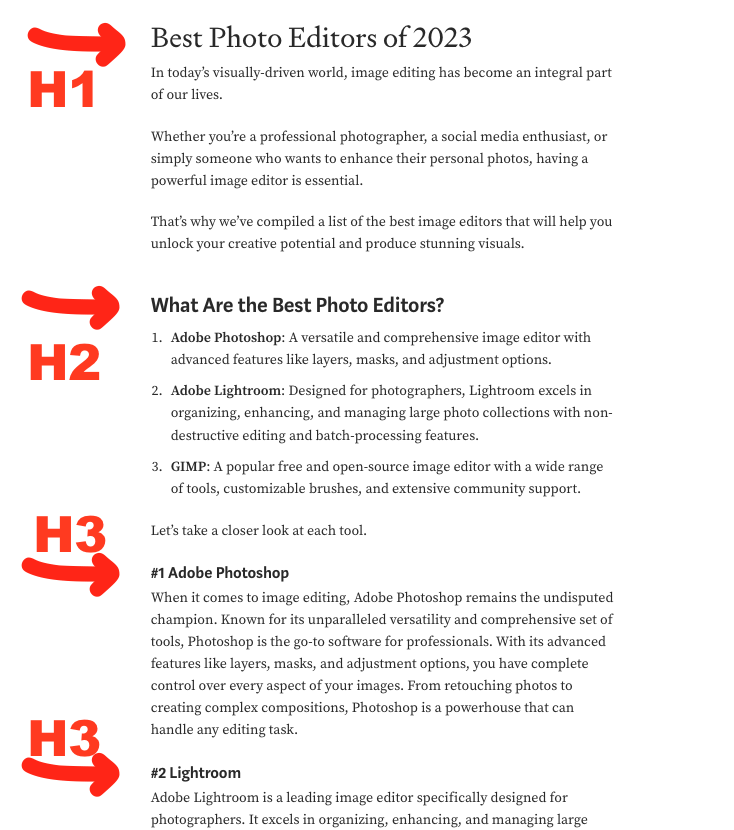
When it comes to optimizing your website for search engines, using proper HTML heading tags such as h1, h2, and h3 can make a significant impact on your SEO efforts. These heading tags not only help search engines understand the structure and hierarchy of your content but also improve the readability and user experience of your web pages.
The h1 tag is the most important heading tag on a webpage. It should be used to indicate the main topic or title of the page. Search engines give more weight to text within the h1 tag, so it is crucial to include relevant keywords that accurately describe the content of the page. Additionally, using only one h1 tag per page helps search engines better understand the primary focus of your content.
Subheadings play a vital role in breaking down content into manageable sections for readers. The h2 tag is typically used for subheadings that are directly related to the main topic indicated by the h1 tag. Similarly, the h3 tag can be used for subsections within an h2 section.
By using hierarchical heading tags like h1, h2, and h3 in a logical order, you not only improve the structure and organization of your content but also provide valuable context to search engines about the relationships between different sections of your webpage.
Properly structured content with relevant heading tags can help improve your website’s SEO performance in several ways:
Utilizing proper HTML heading tags like h1, h2, and h3 is not just good practice for organizing your content—it’s also essential for improving your website’s visibility in search engine results. By incorporating relevant keywords into these headings and structuring them hierarchically, you can enhance both user experience and SEO performance across your web pages.
Remember: when it comes to SEO, every detail matters—including how you structure and format your headings!
Using h1, h2, and h3 tags in SEO serves a crucial purpose in optimizing web content for search engines. These heading tags help organize the structure of a webpage, providing hierarchy and clarity to both users and search engine crawlers. The h1 tag, as the main heading, signals the primary topic of the page to search engines, while h2 and h3 tags are used for subheadings and subsections, respectively. By incorporating relevant keywords into these heading tags and structuring them logically, websites can improve their visibility in search engine results pages (SERPs) and enhance user experience by making content more scannable and digestible. In essence, utilizing h1, h2, and h3 tags effectively in SEO not only aids in better content organization but also contributes to higher search engine rankings and increased website traffic.
The hierarchy of h1, h2, and h3 tags plays a crucial role in SEO by providing a clear structure and organization to web content. Search engines use these heading tags to understand the relationship between different sections of a webpage and prioritize content based on its relevance and importance. The proper use of heading tags, such as having a single h1 tag for the main topic followed by relevant h2 and h3 subheadings, helps search engines interpret the context of the content more accurately. This hierarchical approach not only enhances the readability and user experience but also signals to search engines the key topics and keywords within the content, ultimately improving the website’s visibility and ranking in search results.
Including keywords in your h1 tag can indeed have a positive impact on your SEO efforts. The h1 tag serves as the main heading of a webpage, and search engines give it significant weight when determining the relevance of your content to specific search queries. By incorporating relevant keywords into your h1 tag, you not only provide search engines with valuable context about the primary topic of your page but also increase the likelihood of ranking higher for those keywords. However, it is important to maintain a balance and ensure that the inclusion of keywords in your h1 tag feels natural and aligns with the overall content of the page. Ultimately, using keywords strategically in your h1 tag can help improve the visibility and discoverability of your content in search engine results.
Using multiple h1 tags on a webpage can indeed have a negative impact on SEO. Search engines like Google rely on the h1 tag to understand the main topic or theme of a page, and having multiple h1 tags can confuse search engine crawlers about the primary focus of the content. It is generally recommended to use only one h1 tag per page to clearly indicate the most important heading. Instead, utilizing h2 and h3 tags for subheadings and subsections can help maintain a logical hierarchy within your content while ensuring that search engines properly interpret the structure of your webpage for improved SEO performance.
When it comes to optimizing your website for search engines, utilizing h2 and h3 tags effectively is crucial for improving SEO performance. The best practices for using h2 and h3 tags in SEO involve structuring your content in a hierarchical manner that reflects the relationships between different sections of your webpage. Use h2 tags for subheadings that are directly related to the main topic indicated by the h1 tag, and employ h3 tags for subsections within an h2 section. By organizing your content with relevant and descriptive heading tags, you not only enhance the readability and user experience of your webpage but also provide valuable context to search engines about the relevance and hierarchy of your content. Remember to incorporate relevant keywords into your heading tags to signal to search engines what your content is about and improve its visibility in search engine results.
Heading tags like h1, h2, and h3 play a crucial role in enhancing user experience on a website. By using these heading tags effectively, website content can be organized into clear and structured sections, making it easier for users to navigate and understand the information presented. Clear headings help users quickly grasp the main topics and subtopics of a page, improving readability and guiding them through the content. Additionally, properly utilized heading tags can also improve accessibility for users who rely on screen readers or other assistive technologies to browse the web. In essence, incorporating h1, h2, and h3 tags not only benefits SEO but also significantly impacts the overall user experience by providing clarity and structure to website content.
Search engines interpret heading tags like h1, h2, and h3 to understand the structure and hierarchy of a webpage’s content. The use of these heading tags helps search engines identify the main topics and subtopics within a page, allowing them to prioritize and index the content accordingly. Search engines give more weight to text within h1 tags as it typically represents the main heading or topic of the page. H2 and h3 tags are used for subheadings and subsections, providing additional context and organization to the content. By utilizing proper heading tags with relevant keywords, website owners can improve their chances of ranking higher in search engine results for targeted queries related to their content.
When it comes to optimizing content with heading tags for SEO purposes, there are indeed specific guidelines that can help improve your website’s search engine visibility. It is recommended to use the h1 tag for the main title or topic of the page, ensuring it contains relevant keywords that accurately reflect the content. Subsequent headings such as h2 and h3 should be used to organize subtopics and subsections in a hierarchical manner, providing a clear structure for both users and search engines. Additionally, each heading should be unique and descriptive, avoiding keyword stuffing and focusing on providing valuable information to readers. By following these guidelines and structuring your content effectively with heading tags, you can enhance both the readability and SEO performance of your web pages.
When it comes to using heading tags like h1, h2, and h3 for SEO, there are several common mistakes that should be avoided to ensure optimal performance. One common mistake is using multiple h1 tags on a single webpage, which can confuse search engines about the main topic of the page. Another mistake is neglecting to include relevant keywords in heading tags, missing out on valuable opportunities to improve search engine visibility. Additionally, overusing or misusing h2 and h3 tags without maintaining a logical hierarchy can lead to a disorganized content structure that may negatively impact both SEO and user experience. It’s crucial to use heading tags strategically, ensuring they accurately reflect the content hierarchy and incorporate relevant keywords for effective optimization.
