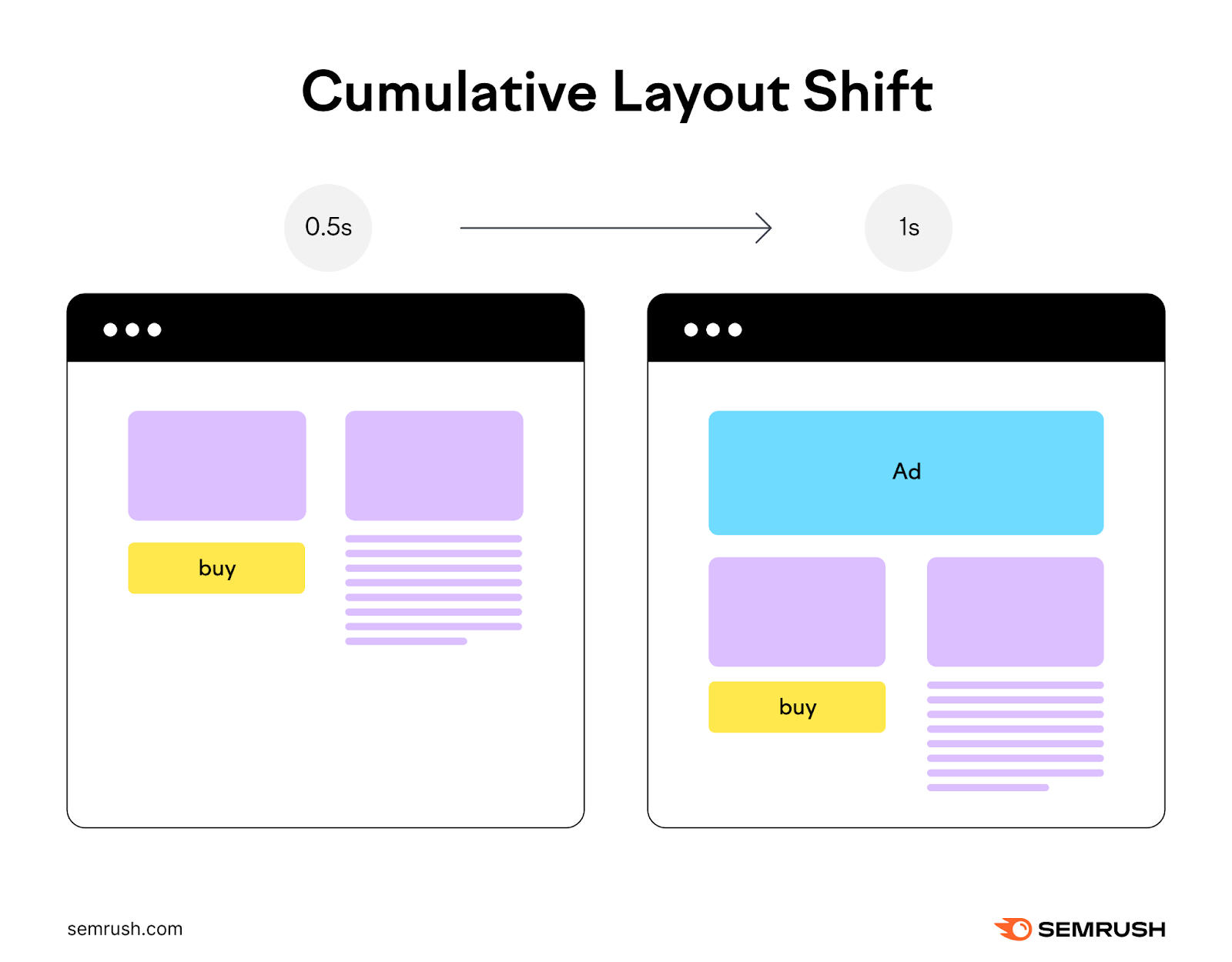
Cumulative Layout Shift (CLS) is a crucial metric in the world of Search Engine Optimization (SEO) that focuses on user experience. It measures the visual stability of a webpage as it loads, indicating whether elements on the page shift unexpectedly, causing a poor user experience.
CLS SEO plays a significant role in improving website performance and search engine rankings. Search engines like Google prioritize websites that provide a seamless user experience, and CLS is one of the key factors they consider.
By optimizing for CLS, webmasters can ensure that their websites load smoothly and prevent elements from shifting during the loading process. This not only enhances user experience but also contributes to lower bounce rates and increased engagement.
Improving CLS involves various strategies, such as optimizing images and videos, ensuring proper dimensions for elements, and using CSS properties to control layout shifts. By implementing these techniques, websites can deliver a more stable and visually appealing experience to users.
Furthermore, prioritizing CLS SEO can lead to improved search engine rankings. Google has indicated that Core Web Vitals, including CLS, are essential ranking factors that influence how websites are positioned in search results. Websites with better CLS scores are more likely to rank higher and attract more organic traffic.
In conclusion, focusing on CLS SEO is essential for enhancing both user experience and SEO performance. By prioritizing visual stability and optimizing layout shifts, websites can create a more engaging environment for visitors while also improving their chances of ranking well in search engine results pages.
Ensuring fast website loading speed is crucial for improving Cumulative Layout Shift (CLS) SEO. A quick loading website reduces the chances of elements shifting unexpectedly during the loading process, leading to a more stable and seamless user experience. By optimizing website speed through techniques such as image compression, minimizing server response times, and leveraging browser caching, webmasters can significantly enhance CLS performance and ultimately boost their search engine rankings. Fast loading speeds not only benefit CLS but also contribute to overall user satisfaction and engagement on the website.
Optimizing and compressing images is a crucial tip for improving CLS SEO. By reducing the file size of images on a webpage, you can significantly decrease loading times and minimize layout shifts. This optimization not only enhances user experience by ensuring quicker page loads but also contributes to a more visually stable environment as elements load seamlessly. Implementing image optimization techniques, such as using the correct file formats, resizing images to appropriate dimensions, and leveraging modern compression algorithms, can have a positive impact on CLS scores and overall website performance.
To improve CLS SEO, it is essential to avoid inserting content dynamically above existing content on a webpage. When new content is added above existing elements during page load, it can cause unexpected shifts in the layout, leading to a poor user experience. By ensuring that content loads in a predictable manner without displacing existing elements, websites can maintain visual stability and provide a seamless browsing experience for users. This practice not only enhances CLS scores but also contributes to higher user engagement and improved SEO rankings.
To improve Cumulative Layout Shift (CLS) for better SEO performance, it is recommended to use set size attribute dimensions for any media, ads, or iframes on your website. By specifying the dimensions of these elements in advance, you can prevent unexpected layout shifts during page loading, ensuring a more stable and seamless user experience. This simple yet effective tip can help enhance visual stability and contribute to a positive overall user experience, ultimately benefiting both your website visitors and search engine rankings.
Preloading key resources is a valuable tip in CLS SEO to minimize unexpected layout shifts. By preloading essential assets such as images, fonts, and scripts, websites can ensure that these elements are ready to be displayed when needed, reducing the chances of sudden layout changes during the loading process. This proactive approach not only improves user experience by creating a more stable and predictable browsing environment but also contributes to better CLS scores and overall website performance.
Implementing smooth animations and transitions on your site is a valuable tip for improving CLS SEO. By ensuring that elements on your webpage move seamlessly and predictably, you can enhance the overall user experience and reduce the likelihood of layout shifts. Smooth animations not only make your site visually appealing but also contribute to a more stable loading process, ultimately leading to better CLS scores and improved search engine rankings.
Regularly monitoring and analyzing CLS scores using Google PageSpeed Insights is a crucial tip for effective CLS SEO strategy. By keeping a close eye on these scores, website owners can gain valuable insights into how their web pages perform in terms of visual stability. Identifying any issues or fluctuations in CLS scores allows for timely adjustments and optimizations to ensure a seamless user experience. Utilizing tools like Google PageSpeed Insights empowers webmasters to proactively address layout shift issues and improve overall website performance, ultimately leading to higher user satisfaction and better SEO rankings.
Consider using a content delivery network (CDN) to improve your CLS SEO performance. By leveraging a CDN, you can distribute your website’s content across multiple servers located in different geographic regions. This helps reduce latency and ensures faster loading times for users accessing your site from various locations. A CDN can significantly enhance the visual stability of your web pages by delivering resources more efficiently, ultimately leading to a smoother user experience and better CLS scores.
To effectively address Cumulative Layout Shift (CLS) issues and improve your website’s user experience, it is essential to test your site on various devices and browsers. By testing across different platforms, you can identify any layout shifts that may occur due to inconsistencies in rendering. This proactive approach allows you to make necessary adjustments to ensure a seamless and visually stable experience for all users, regardless of the device or browser they are using. Regular testing and optimization based on these findings can help enhance your CLS score and ultimately boost your website’s performance in search engine rankings.
